Here, I have simply sown a mix of Mizuna and two varieties of Pak Choi into a seed tray. I like to sow my own mix of seeds rather than buy pre-mixed packets of salad seeds because I like to know what crops I am going to harvest.
Showing posts with label Grow Chinese Vegetable. Show all posts
Wednesday, 17 June 2015
Grow your own oriental leaf salad
In the summer, I like to grow Oriental vegetables for their young leaves.
Monday, 1 July 2013
Time to pick homegrown MangeTout (Snow Peas)!
![]() |
| Don't you just want to pick this Snow Pea (Mange Tout)? |
There can be nothing nicer than picking your own home grown Snow Peas from the garden in the warm, summer evenings. Before the sun sets, I race down to our vegetable patch and seek out the little pods of green that have emerged.
Labels:
Beans
,
Container Growing
,
Grow Chinese Vegetable
,
Grow Your Own Asian Greens
,
Peas / Beans
,
Snow Peas
Friday, 31 May 2013
Easy way to Grow Watercress - Part 1: Propagate
Watercress is one of the herbs/ vegetables that I have been wanting to grow for a while now, but never knew how. Recently, I read that you can propagate watercress from cuttings, and decided to try it out. Here is what I did.
Monday, 6 May 2013
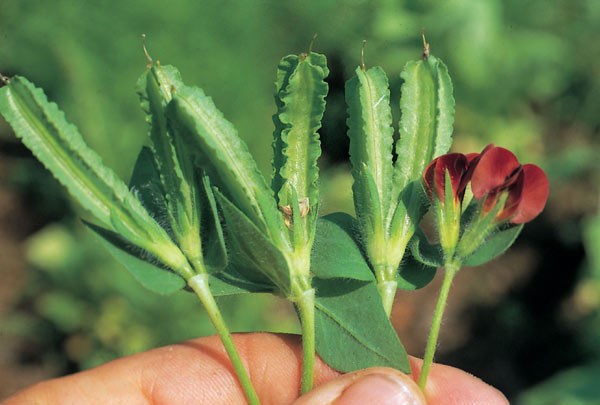
What is the difference between the Winged Bean and the Asparagus Pea?
![]() |
| Photo courtesy: Crocus.co.uk - Asparagus Pea |
Recently, I have been searching for a bean that I used to often eat in Malaysia - a bean that doesn't look like a regular bean, but has four frilly sides to it. It is called the Winged Bean or the Four-Angled Bean. It is a lovely, crunchy bean that is really delicious stir-fried with a spicy chilli, garlic and shrimp paste mix.
After searching for seeds online, I finally stumbled across the Asparagus Pea, which looks identical to the Winged Bean. So, the question is - is there a difference between the Winged Bean and the Asparagus Pea?
Saturday, 27 April 2013
Growing Chinese Vegetables: Grow Tatsoi
Tatsoi is a vegetable that I had not heard of until a few years ago when I started to grow my own vegetables. It's an attractive looking vegetable with a rosette of leaves that opens close to the ground. I have read here (Kitazawa seeds) that Tatsoi tends to grow flatter in the winter, but will grow upright during the warmer months. Isn't that interesting? The Tatsoi that I have planted has never grown big enough for me to see the full effect -- I harvest them as baby leaves, and then they always seem to run to seed.
Friday, 26 April 2013
Grow Chinese Vegetables : Lovely Chinese Broccoli growing in our garden
![]() |
| Kai Lan / Chinese Broccoli growing in the vegetable patch |
After quite a few months of growing in our garden, the Chinese Broccoli (also known as Gai Lan, Kai Lan, Kai Laan, Chinese Kale) has finally grown into a decent size. Earlier, we harvested smaller leaves from the same Kai Lan, when it was much smaller.
Tuesday, 8 January 2013
Growing Rubi Pak Choi with purple leaves!
Over the last few months, we have had two varieties of Pak Choi (Pak Choy, Bok Choy) growing in our vegetable patch. The first is the magnificent looking Rubi (F1) Pak Choi which has lovely deep purple leaves and pale green stems, and the other is a white stemmed, green leaved Dwarf Bok Choy .
Growing
This year, I decided to grow Rubi Pak Choi during the cooler months. The seeds were sowed in the late Summer in the UK (September), and then planted out shortly after.
Have you ever seen a purple Pak Choi ...?
![]() |
| Rubi Pak Choi |
So, having lived in Asia for many years, I thought that I had seen all the Pak Choi (Bok Choy, Pak Choy) that the world had to offer, until I arrived in the UK, and stumbled across a seed packet with a vegetable resembling a Pak Choi on it, only it had purple coloured leaves. This really baffled me, since I had never come across a purple Pak Choi before. It felt a bit like the time I tried to explain to my nephew James who lives in Hong Kong (then twelve), that I had seen someone growing a purple carrot in the UK, to which he snorted in disbelief and asked me if I was sure it wasn't just a rotten one.
Anyhow, to all the people around the world who have grown up eating Pak Choi, whether green or white stemmed, there is now also a purple leaf variety that is a hybrid called Rubi (F1) Pak Choi. The catch is that you will have to grow it yourself, to be able to taste it, as it is not going to be available at your local supermarket any time soon.
You might also be interested in the full post on Growing Rubi Pak Choi.
Thursday, 15 November 2012
Growing Chinese vegetables: Kai Lan / Chinese Broccoli...
![]() |
| Kai Lan/ Chinese Broccoli growing in our vegetable garden |
I am really excited about the Chinese Broccoli (also known as Gai Lan, Kai Lan, Chinese Kale) that I am growing in the garden right now. Chinese kale is so different compared to other kinds of kale - the stems are very tender and the texture of the leaves much more delicate. And the taste! Kai Lan has got to top the list when it comes to "most flavoursome" Chinese vegetable.
Labels:
Grow Chinese Vegetable
,
Grow Your Own Asian Greens
,
Grow Your Own Veg
,
Growing
,
Kailan
,
Kale
Saturday, 22 September 2012
Should I Grow Bitter Melon?
![]() |
Sunday, 6 March 2011
Grow Snake Beans (Yard Long Beans) for a tasty fried bean dish!

If there was ever a bean that I could associate with Asia, it would have to be the Snake Bean. It reminds of walking through markets in Malaysia where bundles of these incredibly long beans, each secured by a rubber band, are piled up onto market stall stands. These beans are thought to have originated from South China and are also known as Yard Long beans, Chinese Long Beans or Asparagus Beans.
My parents grow these delightfully long beans in their backyard in Sydney, Australia and mid February we had our first harvest, which I turned into a tasty dish of "Deep fried snake beans with garlic".

If there was ever a bean that I could associate with Asia, it would have to be the Snake Bean. It reminds of walking through markets in Malaysia where bundles of these incredibly long beans, each secured by a rubber band, are piled up onto market stall stands. These beans are thought to have originated from South China and are also known as Yard Long beans, Chinese Long Beans or Asparagus Beans.
My parents grow these delightfully long beans in their backyard in Sydney, Australia and mid February we had our first harvest, which I turned into a tasty dish of "Deep fried snake beans with garlic".
Friday, 11 February 2011
Grow Your Own Aromatic Lemongrass for Thai & Malaysian cooking!
![]() |
| Freshly harvested lemongrass and chillis from our garden |
A lemongrass plant on first impression looks like wild grass, the kind you might see in an abandoned field that has been overrun by weeds. But upon closer inspection, each blade of grass is actually attached to a thick bulbous stalk with an aroma that becomes apparent as you attempt to twist it away from its base. A mellow lemony fragrance subtly infuses the air leaving you with little doubt why those who first discovered this herb of South East Asian origins decided to cultivate and use it so extensively in their cuisine.
Walking through the supermarket the other day, I was astounded at how expensive lemongrass was. I balked at the prospect of having to pay up to three dollars (that's Australian dollars) per stalk, but luckily I am one of the fortunate few who do not have to, as we have several large clumps of this aromatic grass growing in our garden.
Easy way to propagate Lemongrass so it grows roots!
If you have always wanted to grow lemongrass, then you are going to love this simple method to get your plant started! It took me just two weeks to get a lemongrass stalk to develop roots like this!
Monday, 24 January 2011
Growing Society Garlic or Chinese Garlic Chives?
Growing in my parents' garden at the moment is an edible plant with garlicky foliage that is pretty tasty when stir-fried. They were given a clump of the plant a few years ago, and it has been growing in the garden ever since. For the longest time, we assumed these were Garlic Chives, also called Chinese Chives (or "Gow Choi" in Chinese).
Wednesday, 8 December 2010
Easy way to grow Spring Onions

A few months ago, I wrote about an easy way to grow spring onions (also called scallions, salad onions or 葱). Anyhow, a family member who lives in Sydney, Australia read the post and decided to try it out, resulting in great success and these fantastically lush green leaves. What can I say? These spring onions grown out of a container in Australia turned out even better than ours did in the UK.
Friday, 9 July 2010
Harvest Snow Peas & Look out for Fairies!
Picking Snow peas is one of my secret joys in the garden at the moment. There is something about seeking out these delightful little green pods from behind leaves and stems and then reaching out to snap them off that makes me feel childishly nostalgic.
Sometime gardening isn't all about hard work and labour and sowing for produce, there are moments, fleeting as they may be, that are simply about awesome beauty and elegance that the wonder of nature brings. Oh all right! I know they are just peas, but up until recently, I didn't even realise that peas came from pretty little flowers. And you might think that as very odd, but probably rings true for a large number of people who didn't grow up in 'pea-growing' nations. To grow Snow Peas (Mange Tout or 荷兰豆 pronounced hé lán dòu), you will need to get your hands on some Snow Pea seedlings, plant them in with some good compost, and then, make sure you provide some support for them in the form of canes. Water daily, and in turn they will reward you with a mountain of tasty, crisp green pods.
Our seedlings went into the ground mid April, the same time as our Pak Choi. The plants took about two months before they reached about 5 ft in height, with the first flowers arriving on June 16th. A few days later, my little flower fairies' had disapeared and with a stroke of their magic wands left me a wonderful gift of crunchy green pods.
![]() |
| (L) Snow Peas growing behind Pak Choi in the Chinese wing (R) Look carefully for these crunchy pods |
The pods arrived slowly at first, three or four every few days, but just this last week, we are getting peas almost every day. Yesterday I picked twenty pods and this morning, there were already six new ones. And as the saying goes for peas, the more you pick, the more productive the plants will be, so its best to harvest every day.
So what do you do with the Snow Peas?
For Asian style stir-fries, Snow Peas taste best when they are small, not tiny, but whilst the seeds inside are small and immature. Sometimes you miss a pod that is hidden up the back and by the time you notice it, it will have already turned into a monstrous giant. Whilst still edible, they can be a little stringy so its probably wise to de-string them by snapping the top and then stripping the string down each side.
![]() |
| (L) Caramelised Soy Fried Rice with Cavolo Nero and Snow Peas, all from our garden (R) Sauteed Snow Peas with dried shrimp and garlic |
You won't always pick enough peas to warrant an individual dish, so why not harvest all the bits and bobs you have in your garden and serve up Fried Rice? I am using "Cavolo Nero" which is a Tuscan dark leafy kale as a substitute for Chinese Brocolli (Kai Lan, Gai Lan) and have thrown in some Snow Peas for added crunch to make a delicious Malaysian style Fried Rice.
Seeds: Grown from seedlings bought at our local garden centre
Compost: Vegetable Compost (Organic & Peat Free) from New Horizon
Growing: I planted the seedlings outdoors mid April
Harvest: Mid June (so, approximately 8 weeks)
Pests: I did not encounter any. Slugs occasionally ate the leaves at the bottom of the plant, but I wasn't too bothered by this.
Note: After this post was published, we have had Blackfly.
Monday, 14 June 2010
Grow pretty Chinese veg: Tatsoi and Kale
![]() |
| A bouquet of Kale from the garden |
A few months ago, longing for the taste of Chinese vegetables which had now become a distant memory, I decided to sow a mix of Oriental vegetable seeds. Some of the baby leaves were continuously picked and eaten by us in salads, whilst others were left to grow.
And then finally, over the weekend, we found ourselves face-to-face with a vegetable garden with lots of lovely looking Tatsoi and Kale, all ready for us to devour. So pretty were they, that I almost wanted to leave them in the ground to have as decorative plants!
Tuesday, 8 June 2010
Cut and Grow again Chinese baby leaf salad

How I love a salad in the warmer months, and especially baby leaf salad! This year being the year of homegrowing, I really wanted to have 'cut-and-grow-again' baby salad leaves around the house as they are so handy to have and you can just snip your way to a lovely homegrown salad as and when you desire!
Back in April, we decided to sow "Leaf Salad - Stir Fry mix" seeds from Suttons. The mix included "Pak Choi, Kailan, Choy Sim Hon Tsai Tai, Tatsoi, Chinese Kale and Yukina Savoy".
Friday, 21 May 2010
Easy Pea-sy way to grow the chinese delicacy Pea Sprouts
One of my all-time favourite dishes to order when we dine at a proper authentic Chinese restaurant is "Stir fried Snow Pea Sprouts". Pea Sprouts are also known as Pea Shoots, Pea Tips, Dou Miao or 豆苗, and is somewhat of a delicacy in Chinese cuisine. Now, I have discovered an easy pea-sy way of growing my own Pea Sprouts, thanks to Alys Fowler of the BBC's "Edible Garden" television series. Now, unlike Alys, I did not grow up in the country and thus do not have any green fingers or thumbs for that matter, so I was genuinely doubtful that I would be able to do this.
However, here is a picture capturing my fantastic results (the green stuff, not the Bollinger champagne)...!

Sunday, 16 May 2010
Grow Pak Choi: from garden to wok!

Since arriving in England a few months ago, there has been a noticeable downturn in the rate of my Chinese-Vegetable-Cooking Index. Key to this is the absence of Chinese Greens at our local supermarket.
Now, I have decided to grow some 'Pak Choi', also known as 'Bok Choy' or '白菜' depending if you're English, Australian or....well...Chinese. Its one of those great vegetables that you can just bung into your noodles or stir-fry to deliver an almost guaranteed green-sweetness and tasty crunch.
Mid-April, we were at our local garden centre and I was elated to find Pak Choi seedlings. We got ten for £1 (after a 50% discount); turns out the poor little seedlings had been nibbled at by hungry mice....
Subscribe to:
Posts
(
Atom
)